
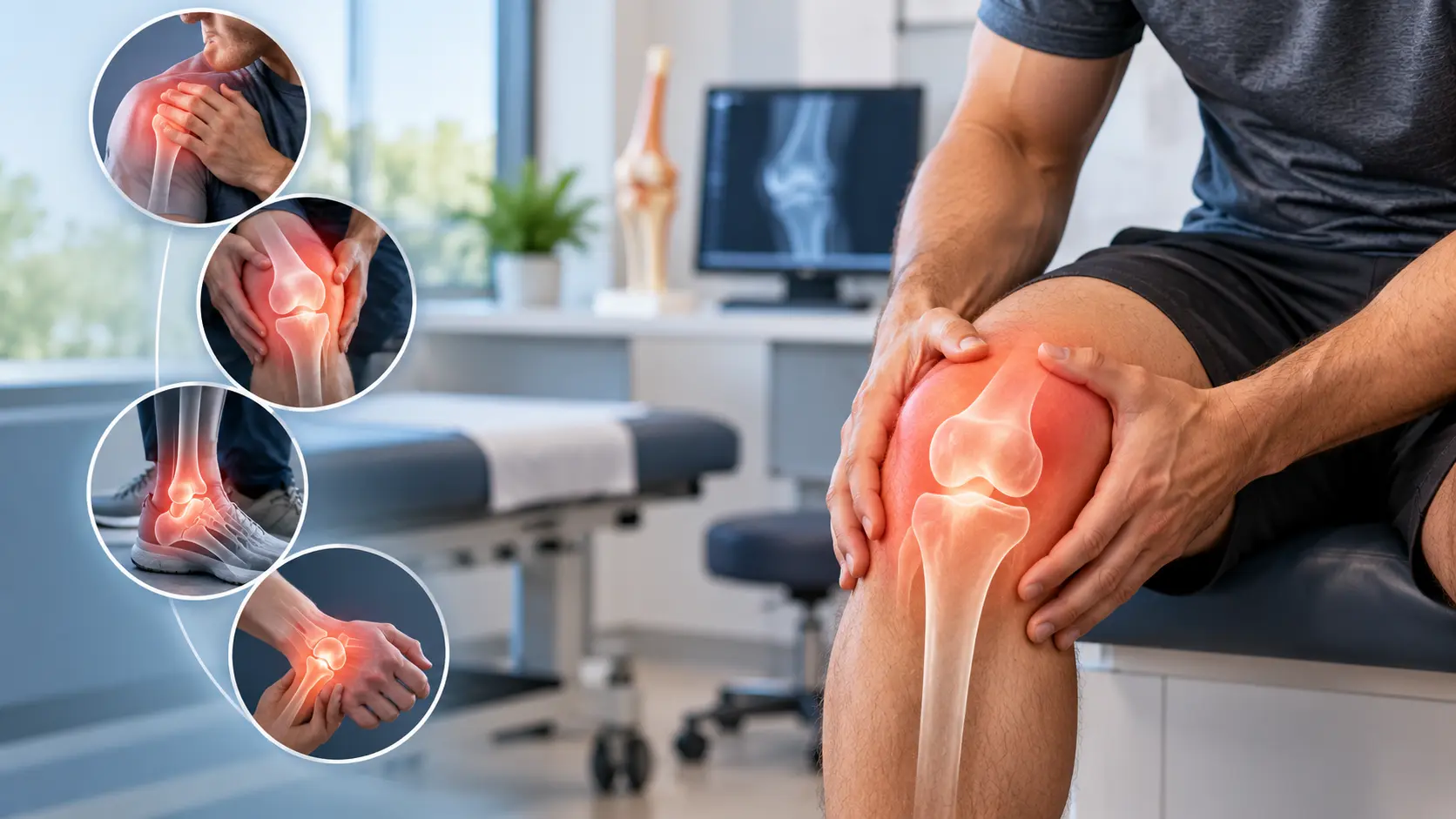
Joint pain can make everyday activities such as walking, working, exercising, climbing stairs, or even sleeping more difficult. While occasional soreness may improve with rest, persistent or worsening pain can indicate an injury, arthritis, inflammation, or another underlying condition that needs medical attention.
The right joint pain treatment options depend on the location, severity, duration, and cause of the pain. Treatment may range from rest and activity modification to physical therapy, medications, or injections. In some cases, prompt evaluation is important to rule out a fracture, significant ligament injury, infection, or another serious problem.
Patients looking for convenient medical care can learn more about Urgentology Care and its available healthcare services.
What Causes Joint Pain?
Joint pain can develop for many different reasons. An injury from sports, work, or an accident may cause sudden pain and swelling. Repetitive movements can also place stress on joints over time.
Common causes include arthritis, sprains, strains, tendon problems, bursitis, overuse injuries, and inflammation. Knee and shoulder pain are particularly common because these joints are frequently involved in physical activity.
For example, shoulder pain causes and treatment can vary considerably. Rotator cuff problems, tendon irritation, bursitis, arthritis, instability, and acute injuries may produce similar symptoms but require different treatment approaches.
You can also explore what Urgentology Care treats to learn about conditions that may be evaluated at an urgent care visit.
Common Joint Pain Treatment Options
There is no single treatment that works for every type of joint pain. A healthcare professional may recommend one or more approaches based on the underlying cause.
Rest and Activity Modification
For minor overuse injuries, temporarily reducing activities that aggravate the joint can help. Rest does not necessarily mean avoiding all movement. Gentle activity may be appropriate when it does not worsen symptoms.
For an acute injury, protecting the affected area and gradually returning to normal activity can help prevent further irritation.
Ice or Heat
Cold therapy may be useful shortly after certain injuries, particularly when swelling is present. Heat can sometimes help with stiffness and muscle tightness.
The appropriate approach depends on the type and timing of the problem. A healthcare professional can provide more specific guidance based on the injury or condition.
Over-the-Counter Pain Medication
Certain over-the-counter medications can provide temporary relief from joint pain. Nonsteroidal anti-inflammatory drugs (NSAIDs), for example, are commonly used for pain associated with osteoarthritis when appropriate. The American Academy of Orthopaedic Surgeons and American College of Rheumatology provide evidence-based guidance supporting NSAIDs for appropriate osteoarthritis patients.
However, NSAIDs are not appropriate for everyone. People with certain kidney, gastrointestinal, cardiovascular, or medication-related risks should discuss their use with a healthcare professional.
Physical Therapy and Exercise
Physical therapy is another important option for many joint conditions. A structured program can focus on improving flexibility, strength, balance, range of motion, and joint function.
For osteoarthritis, evidence-based guidelines support nonsurgical approaches that can reduce pain and improve function. Depending on the joint and diagnosis, these approaches may include exercise, physical therapy, medication, and other conservative treatments.
A physical therapist can also help modify exercises so the joint is not repeatedly exposed to movements that aggravate symptoms.
This can be particularly relevant for patients searching for knee pain treatment without surgery, especially when symptoms are related to mild or moderate osteoarthritis or certain non-surgical injuries.
Joint Injection Therapy
For some types of joint pain, injections may be considered when conservative treatment has not provided enough relief. Corticosteroid injections are one example. For certain osteoarthritis conditions, clinical guidelines support intra-articular corticosteroid injections as an option for short-term pain relief.
People searching for joint injection therapy near me should understand that injections are not appropriate for every type of joint pain. The decision depends on the diagnosis, joint involved, medical history, and other factors.
A clinician may first determine whether the pain is coming from the joint itself or from surrounding muscles, tendons, ligaments, or other structures.
For information about available medical services, visit Urgentology Care’s medical services page.
Joint Pain After a Sports Injury
Sports injuries can cause sudden joint pain, swelling, bruising, weakness, or reduced range of motion. Common examples include ankle sprains, knee injuries, shoulder injuries, and muscle or tendon strains.
Someone searching for sports injury urgent care Arlington TX may benefit from prompt evaluation when an injury causes significant pain, swelling, difficulty bearing weight, or a noticeable loss of movement.
Urgent evaluation may help determine whether imaging, supportive treatment, referral, or additional follow-up is necessary. You can review the care available through Urgentology Care when looking for treatment options following an injury.
When to See a Doctor for Joint Pain
Knowing when to see a doctor for joint pain is important because persistent symptoms should not always be managed at home.
Consider medical evaluation when:
- Joint pain continues or repeatedly returns.
- Swelling or stiffness interferes with normal activities.
- You have difficulty walking or putting weight on a joint.
- Pain develops after a fall, collision, or sports injury.
- The joint appears unstable or its range of motion is significantly reduced.
- Symptoms are getting worse instead of improving.
Prompt medical attention is particularly important when joint pain is accompanied by major swelling, significant trauma, deformity, inability to use the affected limb, or other concerning symptoms.
If you are uncertain about the appropriate level of care, contacting a medical provider can help determine the next step.
Knee Pain Treatment Without Surgery
Many people want to explore knee pain treatment without surgery before considering an operation. Depending on the cause, nonsurgical management can include activity modification, physical therapy, weight management when appropriate, medications, supportive devices, and injections.
AAOS guidelines for knee osteoarthritis include several nonsurgical treatment options intended to reduce pain and improve function. Treatment should be individualized rather than based solely on the presence of knee pain.
Persistent knee pain should still be evaluated because osteoarthritis is only one possible cause. Meniscus injuries, ligament injuries, bursitis, tendon problems, and other conditions may require different approaches.
Finding Joint Pain Relief in Colleyville and Arlington
When joint pain interferes with your daily activities, getting an evaluation can help identify the likely source of the problem and determine appropriate next steps.
Patients looking for joint pain relief options Colleyville TX or surrounding communities can explore local urgent care services based on their symptoms and circumstances.
Urgentology Care provides information about its care options through its official website and medical services. Before visiting, patients can also learn more about the clinic and review patient reviews.
How to Reduce the Risk of Recurring Joint Pain
Treatment is only one part of managing joint health. Once the cause of pain is understood, several habits may help reduce repeated problems.
Gradually increase exercise intensity rather than making sudden changes. Use appropriate technique during sports and resistance training. Warm up before demanding physical activity, and allow adequate recovery between intense sessions.
Maintaining muscle strength around vulnerable joints can also improve support and movement. For people with recurring injuries, a healthcare professional or physical therapist can help identify movement patterns or muscle weaknesses that may contribute to symptoms.
If pain continues despite home measures, schedule an evaluation rather than repeatedly treating the symptoms without determining the underlying cause.
Get the Right Evaluation for Your Joint Pain
The best joint pain treatment options depend on what is actually causing the pain. Rest, ice, medication, physical therapy, injections, and other treatments can all have a role, but they are not interchangeable and may not be appropriate for every condition.
Whether you are dealing with knee pain, shoulder discomfort, an athletic injury, or persistent joint stiffness, an evaluation can help determine whether you need conservative care, diagnostic testing, injection therapy, or referral to another specialist.
To discuss your symptoms or available appointment options, visit the Urgentology Care contact page.
Frequently Asked Questions
What are the most common joint pain treatment options?
Common approaches include activity modification, ice or heat, medications, physical therapy, targeted exercises, supportive devices, and certain injections. The appropriate treatment depends on the cause and severity of the joint pain.
Can knee pain be treated without surgery?
Yes. Depending on the cause, knee pain treatment without surgery may include exercise, physical therapy, activity modification, medications, weight-management strategies when appropriate, and injections. AAOS guidelines include multiple nonsurgical approaches for knee osteoarthritis.
When should I see a doctor for joint pain?
You should consider medical evaluation when pain persists, repeatedly returns, limits movement, causes significant swelling, develops after an injury, or interferes with walking or normal activities. Severe trauma, deformity, or inability to use the joint warrants prompt evaluation.
Is joint injection therapy appropriate for everyone?
No. Joint injection therapy near me may be considered for certain conditions, but injections are not appropriate for every patient or every type of joint pain. A clinician should determine whether an injection is suitable after evaluating the joint and underlying condition.
What are common shoulder pain causes and treatment options?
Shoulder pain causes and treatment vary widely. Common causes can include overuse injuries, rotator cuff problems, bursitis, arthritis, instability, and acute trauma. Treatment may include activity modification, medication, physical therapy, or other care depending on the diagnosis.
Where can I get treatment for a sports injury in Arlington, TX?
People searching for sports injury urgent care Arlington TX can consider an urgent care evaluation when an injury causes pain, swelling, reduced movement, or difficulty using the affected area. Visit Urgentology Care to learn more about available services.