
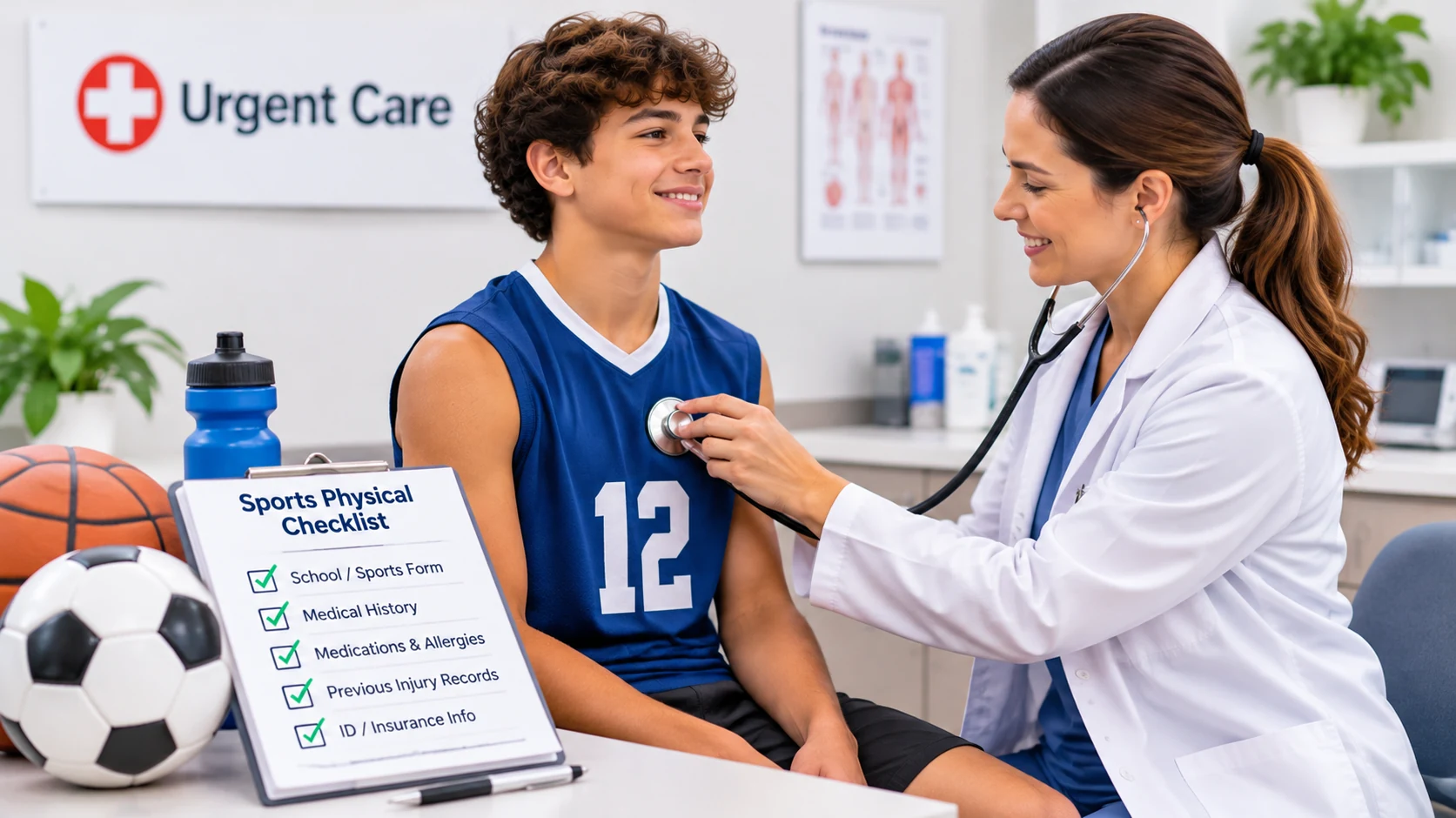
Getting ready for a new sports season involves more than buying uniforms, athletic shoes, and equipment. Students often need a sports physical before participating in school athletics, competitive sports, or extracurricular activities. For parents, preparing the required paperwork and medical information ahead of time can make the appointment much easier.
An urgent care sports physical is a convenient option for families who need a medical evaluation before the sports season begins. However, knowing what documents to bring, what the examination includes, and what questions the healthcare provider may ask can help prevent unnecessary delays.
Whether your child is joining a school basketball team, starting football practice, or participating in another athletic activity, this guide explains how to prepare for a sports physical and what Arlington and Colleyville families should know before visiting an urgent care clinic.
What Is an Urgent Care Sports Physical?
A sports physical, also called a preparticipation physical evaluation (PPE), is a medical examination designed to assess whether someone can safely participate in physical activities.
The examination helps identify potential health concerns that could increase the risk of illness or injury during sports participation.
An urgent care sports physical typically includes a review of medical history and a physical examination. Depending on the student’s health and examination findings, the provider may recommend additional evaluation before granting clearance.
Sports physicals are commonly required for:
- Middle school and high school athletics.
- School basketball, football, soccer, and baseball teams.
- Track and field activities.
- Competitive sports programs.
- Summer sports camps.
- Certain extracurricular physical activities.
The specific forms and requirements depend on the school, district, and sports organization.
At Urgentology Care, students and parents can explore available medical services, including school and sports physical examinations.
What to Bring to an Urgent Care Sports Physical
Preparing the necessary documents and information before your appointment can help the healthcare provider complete the examination more efficiently.
Here is a practical checklist for parents and students.
1. School or Sports Organization Physical Form
This is one of the most important things to bring.
Many schools provide a specific sports physical form that must be completed and signed by a qualified healthcare professional. The form may include medical history questions, examination findings, and a section for medical clearance.
For Texas students participating in University Interscholastic League (UIL) athletics, make sure you have the current UIL preparticipation physical evaluation form.
The UIL provides updated forms for each school year. Its 2026–2027 athletics forms include the approved Athletic and Marching Band Pre-participation Physical Evaluation.
Parents should download the correct paperwork before visiting rather than relying on an older form.
You can also check the official UIL athletics forms to confirm which documents are required.
2. Medical History Information
Your child’s medical history helps the healthcare provider identify conditions that could affect sports participation.
Before the appointment, discuss the following information with your child:
- Previous injuries, including fractures, sprains, and concussions.
- Existing medical conditions such as asthma or diabetes.
- Previous surgeries or hospitalizations.
- History of chest pain, dizziness, or fainting during exercise.
- Previous breathing difficulties during physical activity.
- Known allergies.
- Current medications and supplements.
Do not leave out previous health concerns simply because your child feels better now.
Certain conditions may require additional precautions, medical documentation, or specialist clearance before participation.
3. Family Medical History
Family medical history is another important part of a sports physical.
Healthcare providers may ask whether close family members have experienced certain medical conditions, especially heart-related problems.
Be prepared to discuss:
- Family history of heart disease.
- Sudden cardiac arrest or unexplained sudden death.
- Heart rhythm abnormalities.
- Inherited medical conditions.
- Family history of serious exercise-related complications.
This information can help identify potential concerns that may not be obvious during a routine physical examination.
4. Current Medication and Allergy Information
Bring a list of medications your child currently takes, including prescription medications, over-the-counter products, vitamins, and supplements.
Also provide information about any medication allergies, food allergies, or previous reactions to medications.
For students with asthma, bringing their prescribed inhaler and relevant medical information can help the provider understand how the condition is managed during exercise.
If your child uses an EpiPen or another emergency medication, make sure the healthcare provider knows about it.
5. Previous Medical and Injury Records
If your child has previously experienced a significant sports injury or medical condition, bring relevant medical documentation.
For example, students recovering from a concussion, orthopedic injury, or heart-related condition may need additional evaluation before returning to competitive sports.
Useful records may include:
- Previous examination reports.
- Specialist recommendations.
- Recent diagnostic test results.
- Surgical records.
- Physical therapy documentation.
- Medical clearance letters.
Having these documents available can help the provider make a more informed decision about participation.
6. Identification and Insurance Information
Parents should also bring identification and insurance information when applicable.
Although sports physicals may have a separate payment arrangement from regular medical visits, having these details available can make registration easier.
Contact the clinic beforehand to confirm pricing, accepted payment methods, and any documentation requirements.
What Happens During Urgent Care Sports Physicals?
Many parents wonder what their child will actually experience during the examination.
Urgent care sports physicals generally involve reviewing medical history and checking important aspects of overall health.
A typical examination may include:
Vital signs: The provider checks blood pressure, heart rate, and respiratory rate to assess basic health indicators.
Heart and lung examination: The healthcare professional listens to the heart and lungs to identify unusual sounds or potential concerns.
Vision assessment: Vision may be checked to identify difficulties that could affect safe sports participation.
Musculoskeletal examination: The provider evaluates posture, flexibility, movement, strength, and joint function to identify possible limitations.
General physical assessment: The examination may also include skin health, reflexes, mobility, and other relevant physical observations.
The findings help determine whether the student can participate without restrictions or needs additional medical evaluation.
Not every student receives automatic clearance during the first visit. If the examination identifies a potential concern, additional testing or specialist assessment may be necessary.
When Should You Schedule a Sports Physical?
It is better not to wait until the day before the first practice to arrange a physical examination.
The American Academy of Pediatrics identifies approximately six weeks before the first scheduled practice as an ideal time for a preparticipation evaluation. This allows time to address concerns that may require additional testing or follow-up.
Some students may need medical clearance from another provider, updated documentation, or additional treatment before participating.
Planning ahead reduces the possibility of missing the start of the sports season because of incomplete paperwork.
However, if you need a same day sports physical, contact an urgent care clinic to confirm availability and required documents.
Where to Get a Sports Physical Near Me in Arlington and Colleyville?
Parents searching for a sports physical near me generally want a convenient clinic that can examine their child and complete the necessary paperwork.
Urgentology Care offers school and sports physicals for adults and children at its Arlington and Colleyville locations.
Arlington Location
4130 N. Collins Street
Arlington, TX 76005
Phone: 817-809-8760
Colleyville Location
3855 Glade Road, Suite 140
Colleyville, TX 76034
Phone: 817-809-7365
Families looking for a sports physical Arlington TX can visit the Arlington clinic for a school or sports physical.
Similarly, parents searching for a sports physical Colleyville TX can contact the Colleyville location to learn about available services.
According to the clinic’s school and sports physical information, physicals are available on a walk-in basis, and appointments can also be scheduled to help reduce waiting time.
Is an Urgent Care Sports Physical Different From a Regular Checkup?
Yes. Although both examinations evaluate overall health, their purposes are different.
A routine wellness examination focuses on general health, preventive care, growth, development, and ongoing medical needs.
A sports physical focuses specifically on whether someone can safely participate in physical activities. It pays particular attention to medical history, cardiovascular health, previous injuries, joint movement, and physical limitations.
A sports physical should not replace regular pediatric or primary care visits.
The American Academy of Pediatrics generally recommends that students receive their sports evaluations through their regular healthcare provider, who has access to their medical records. If a family uses urgent care instead, providing complete medical information and sharing the results with the student’s primary care provider is important.
You can explore other physical examination services available at Urgentology Care to understand its range of evaluation options.
Prepare Early and Make Sports Season Easier
A little preparation can make a sports physical appointment much easier for students and parents.
Bring the correct school paperwork, review your child’s medical history, prepare a medication and allergy list, and collect relevant medical records. Arriving with this information helps the healthcare professional complete the assessment and identify any issues that may need attention.
If you are considering an urgent care sports physical in Arlington or Colleyville, Urgentology Care provides a convenient option for families looking for school and athletic physical examinations.
You can learn more about the clinic through its About Us page or read patient reviews to understand other patients’ experiences.
For questions about scheduling, pricing, or required documents, visit the Urgentology Care contact page.
Preparing ahead of time helps students focus on what matters most: enjoying their sport, staying active, and participating as safely as possible.
Frequently Asked Questions
What should I bring to an urgent care sports physical?
Bring the school’s sports physical form, medical history, family medical history, medication and allergy information, relevant medical records, and identification. Insurance information may also be helpful. Check with the clinic for any additional requirements.
Can I get a same day sports physical at urgent care?
Many urgent care clinics offer walk-in or same-day sports physical appointments. Urgentology Care advertises walk-in school and sports physicals, but contacting the location before visiting can help confirm current availability and waiting times.
Does my child need a sports physical every year?
Many schools and athletic organizations require updated sports physical documentation periodically. Requirements vary by school, district, and organization. Check the current school or UIL requirements to determine when another examination is necessary.
What happens if my child does not pass a sports physical?
A student may need additional medical testing, treatment, or specialist evaluation before receiving sports clearance. Depending on the findings, the healthcare provider may recommend restricted participation or temporarily withhold clearance until the concern is addressed.
How long does an urgent care sports physical take?
The time depends on the student’s medical history, examination findings, and paperwork requirements. A straightforward examination may be relatively quick, but additional evaluation can take longer. Arriving with completed forms and medical records can help make the process smoother.
Can urgent care complete school sports physical forms?
Yes, urgent care clinics that offer sports physical services can complete appropriate school physical forms following an examination. However, students and parents should confirm that the clinic can complete their specific school or athletic organization’s required documentation.
When should I schedule a sports physical before the season?
Ideally, schedule the examination approximately six weeks before the first practice. This gives families time to arrange additional testing or medical clearance if the examination identifies a concern.