
Blood pressure is one of the most important measurements used to assess your overall health, yet high blood pressure often develops without noticeable symptoms. A blood pressure check at urgent care can provide a quick snapshot of your cardiovascular health and help identify readings that may need further evaluation.
Whether you are visiting urgent care because of a headache, dizziness, feeling unwell, or simply want to understand an unexpectedly high reading, knowing what to expect can make your visit easier. Urgent care professionals can measure your blood pressure, evaluate related symptoms, and determine whether you need additional medical attention or follow-up.
At Urgentology Care, patients can receive convenient evaluation for a variety of non-life-threatening medical concerns. Understanding how blood pressure is checked and what the numbers mean can help you make informed decisions about your health.
What Is Blood Pressure?
Blood pressure is the force of blood pushing against the walls of your arteries as your heart pumps blood throughout your body. A blood pressure reading includes two numbers.
The systolic pressure, or top number, reflects the pressure in your arteries when your heart contracts. The diastolic pressure, or bottom number, reflects the pressure when your heart relaxes between beats.
According to the American Heart Association, a normal adult blood pressure reading is generally below 120/80 mm Hg. Readings from 130–139 systolic or 80–89 diastolic fall into Stage 1 hypertension, while readings of 140 or higher systolic or 90 or higher diastolic fall into Stage 2 hypertension.
One unusually high reading does not automatically mean you have chronic hypertension. A healthcare professional may need repeated measurements and, in some cases, home or ambulatory monitoring to confirm a diagnosis.
Why Get a Blood Pressure Check at Urgent Care?
Urgent care can be a practical option when you need prompt evaluation but do not have a medical emergency requiring an emergency department.
You may consider a blood pressure check at urgent care when:
- You received an unexpectedly high reading at home or another location.
- You are experiencing symptoms that could require medical evaluation.
- You have run out of medication or have concerns about your current blood pressure management.
- You have not had your blood pressure checked recently.
- You need evaluation while your primary care provider is unavailable.
- You want professional guidance after noticing repeated elevated readings.
Urgent care can also evaluate your blood pressure in the context of your current symptoms rather than treating the number in isolation.
Explore Urgentology Care’s medical services to learn more about available care options.
What Happens During a Blood Pressure Check?
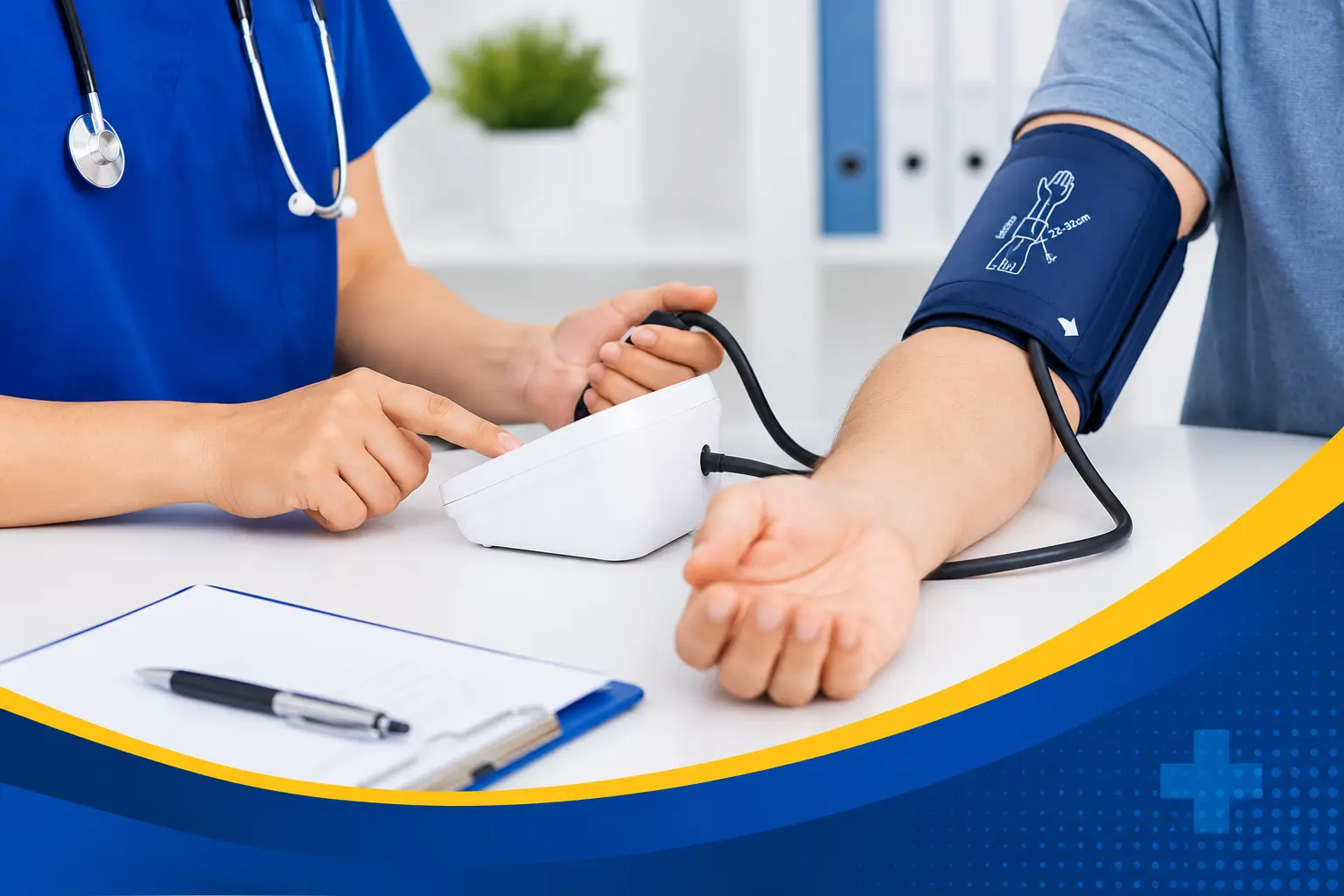
A blood pressure check is generally quick and noninvasive. You will usually sit comfortably while a healthcare professional places an inflatable cuff around your upper arm.
For a more accurate measurement, proper positioning matters. The American Heart Association recommends sitting with your back supported, keeping both feet flat on the floor, supporting your arm at heart level, and remaining quiet and still during the measurement.
The cuff temporarily tightens around your arm and then releases. The device measures the pressure inside your arteries and displays your systolic and diastolic numbers.
If the initial reading is higher than expected, your provider may repeat the measurement after you have rested. This is important because temporary factors such as stress, physical activity, or discomfort can influence a reading.
Your provider may also ask about:
- Previous blood pressure readings
- Prescription and over-the-counter medications
- Existing medical conditions
- Family history
- Recent symptoms
- Lifestyle factors
- Home blood pressure readings
This information helps put your blood pressure result into context.
Understanding Your Blood Pressure Numbers
Knowing the numbers can make your visit more useful. Current American Heart Association categories for adults include:
| Blood Pressure Category | Systolic | Diastolic |
|---|---|---|
| Normal | Less than 120 | Less than 80 |
| Elevated | 120–129 | Less than 80 |
| Stage 1 Hypertension | 130–139 | 80–89 |
| Stage 2 Hypertension | 140 or higher | 90 or higher |
| Severe Hypertension | Higher than 180 | and/or higher than 120 |
These categories are useful for understanding a reading, but a single measurement should not be used to self-diagnose chronic hypertension.
Your healthcare provider can determine whether your reading requires follow-up, additional testing, lifestyle changes, medication evaluation, or monitoring.
What Are the Signs of High Blood Pressure?
One of the biggest challenges with hypertension is that it frequently causes no obvious symptoms. That means waiting for symptoms is not a reliable way to determine whether your blood pressure is high.
Some people may wonder about the signs of high blood pressure or search for high blood pressure symptoms to watch for. While severe elevations can be associated with concerning symptoms, many people with hypertension feel completely normal.
Potential warning symptoms associated with severely elevated blood pressure can include chest pain, shortness of breath, back pain, numbness, weakness, changes in vision, or difficulty speaking.
This is why routine measurement is so important. A blood pressure check can identify an elevated reading even when you feel healthy.
When to Get Your Blood Pressure Checked
Knowing when to get your blood pressure checked depends on your age, health history, previous readings, and risk factors.
Adults should have their blood pressure measured regularly as part of routine healthcare. The American Heart Association recommends annual checks for adults age 20 and older whose blood pressure is normal, while the USPSTF recommends screening all adults 18 and older and tailoring the frequency based on age and risk.
You should also consider a blood pressure check when:
- You have repeatedly received elevated readings at home.
- You have been told that your blood pressure is high.
- You have risk factors for hypertension.
- Your healthcare provider has recommended regular monitoring.
- You are experiencing new or concerning symptoms.
- You are taking medication for hypertension and need evaluation or follow-up.
If you are specifically looking for a blood pressure check Arlington TX, urgent care may offer a convenient option when you need timely evaluation.
For information about conditions treated at Urgentology Care, visit the What We Treat page.
Blood Pressure Monitoring at Urgent Care
Blood pressure monitoring urgent care visits may be particularly useful when you have an elevated reading that needs professional interpretation.
During the visit, the clinician may repeat your blood pressure and compare it with any previous readings you provide. If your blood pressure remains elevated, you may be advised to follow up with your primary care provider or use home monitoring to collect additional readings.
The USPSTF recommends confirming hypertension outside the clinical setting with validated home blood pressure monitoring or ambulatory blood pressure monitoring before starting treatment in appropriate adults.
Keeping a record of your readings can help your healthcare provider identify patterns over time. It may also show whether your blood pressure changes at different times of the day or in different environments.
What Can Affect a Blood Pressure Reading?
Blood pressure can vary from one measurement to another. Before a reading, factors such as physical activity, stress, caffeine, smoking, or discomfort may influence your numbers.
That is one reason healthcare professionals prefer proper positioning and a period of quiet rest before measurement. A single high result should be interpreted alongside your health history and additional readings rather than automatically treated as a diagnosis.
For home monitoring, use a validated upper-arm device when possible and follow the manufacturer’s instructions. Recording the date, time, and readings can provide useful information for your healthcare provider.
When High Blood Pressure Requires Emergency Care
Some blood pressure readings require immediate attention.
If your blood pressure is higher than 180/120 mm Hg, the American Heart Association recommends waiting at least one minute and taking another reading. If the reading remains that high, the presence of symptoms becomes especially important.
Call 911 for a blood pressure reading above 180/120 mm Hg accompanied by symptoms such as:
- Chest pain
- Shortness of breath
- Back pain
- Numbness
- Weakness
- Vision changes
- Difficulty speaking
These may indicate a hypertensive emergency and possible organ damage.
Urgent care is appropriate for many non-emergency medical concerns, but severe symptoms or a potential life-threatening emergency require emergency medical services.
How to Prepare for Your Blood Pressure Check
You generally do not need extensive preparation for a blood pressure check. However, a few simple steps can help produce a more reliable measurement.
Try to arrive with information about medications you currently take and, when available, a record of recent home blood pressure readings. Avoid intense physical activity immediately before the measurement, and take a few minutes to sit quietly before your blood pressure is taken.
It is also helpful to tell the provider about any symptoms you are experiencing and when they began.
If you have questions about urgent care services, visit the Urgentology Care contact page.
Take Your Blood Pressure Seriously, Even When You Feel Fine
High blood pressure is often called a “silent” condition because it may not produce noticeable symptoms. Regular checks can identify elevated blood pressure before complications develop.
Consistently high blood pressure can increase the risk of cardiovascular problems, including heart attack and stroke. Managing blood pressure may involve lifestyle changes, medication, regular monitoring, or a combination of approaches depending on your individual situation.
A blood pressure check at urgent care can be a useful first step when you need convenient evaluation of an unexpected reading or symptoms. However, urgent care evaluation should be part of an ongoing healthcare strategy when blood pressure remains elevated.
You can learn more about blood pressure care through Urgentology Care’s blood pressure treatment information, or visit the Urgentology Care homepage to explore available services.
Frequently Asked Questions
Can urgent care check my blood pressure?
Yes. Urgent care can measure your blood pressure and evaluate the result in relation to your symptoms and health history. If the reading is elevated, the provider may repeat it and recommend appropriate follow-up or additional monitoring.
Is one high blood pressure reading enough to diagnose hypertension?
No. A single elevated reading does not necessarily confirm chronic hypertension. Healthcare professionals may use repeated office readings and, when appropriate, validated home or ambulatory monitoring to confirm the diagnosis.
What are the signs of high blood pressure?
Most people with high blood pressure do not experience obvious symptoms. Very high blood pressure can be associated with symptoms such as chest pain, shortness of breath, weakness, numbness, vision changes, or difficulty speaking.
When should I get my blood pressure checked?
Blood pressure should be checked routinely as part of preventive healthcare and more often when you have elevated readings or risk factors. Adults with normal readings should still receive periodic screening, while people with hypertension may need more frequent monitoring based on their provider’s recommendations.
Is 180/120 an emergency blood pressure reading?
A reading above 180/120 mm Hg is considered severe hypertension. Repeat the measurement after at least one minute. If it remains that high and you have symptoms such as chest pain, shortness of breath, weakness, vision changes, or difficulty speaking, call 911 immediately.
Can I monitor my blood pressure at home?
Yes. Home blood pressure monitoring can provide useful information about your blood pressure outside a medical setting. Use a validated device and keep a record of your measurements so your healthcare provider can evaluate trends over time.
Where can I get a blood pressure check in Arlington, TX?
Patients searching for a blood pressure check Arlington TX can consider a local urgent care clinic for convenient evaluation, particularly when their primary care provider is unavailable. Visit Urgentology Care to learn more about available urgent care services and locations.